An exceptional 15th-century Buddha to be auctioned on March 13
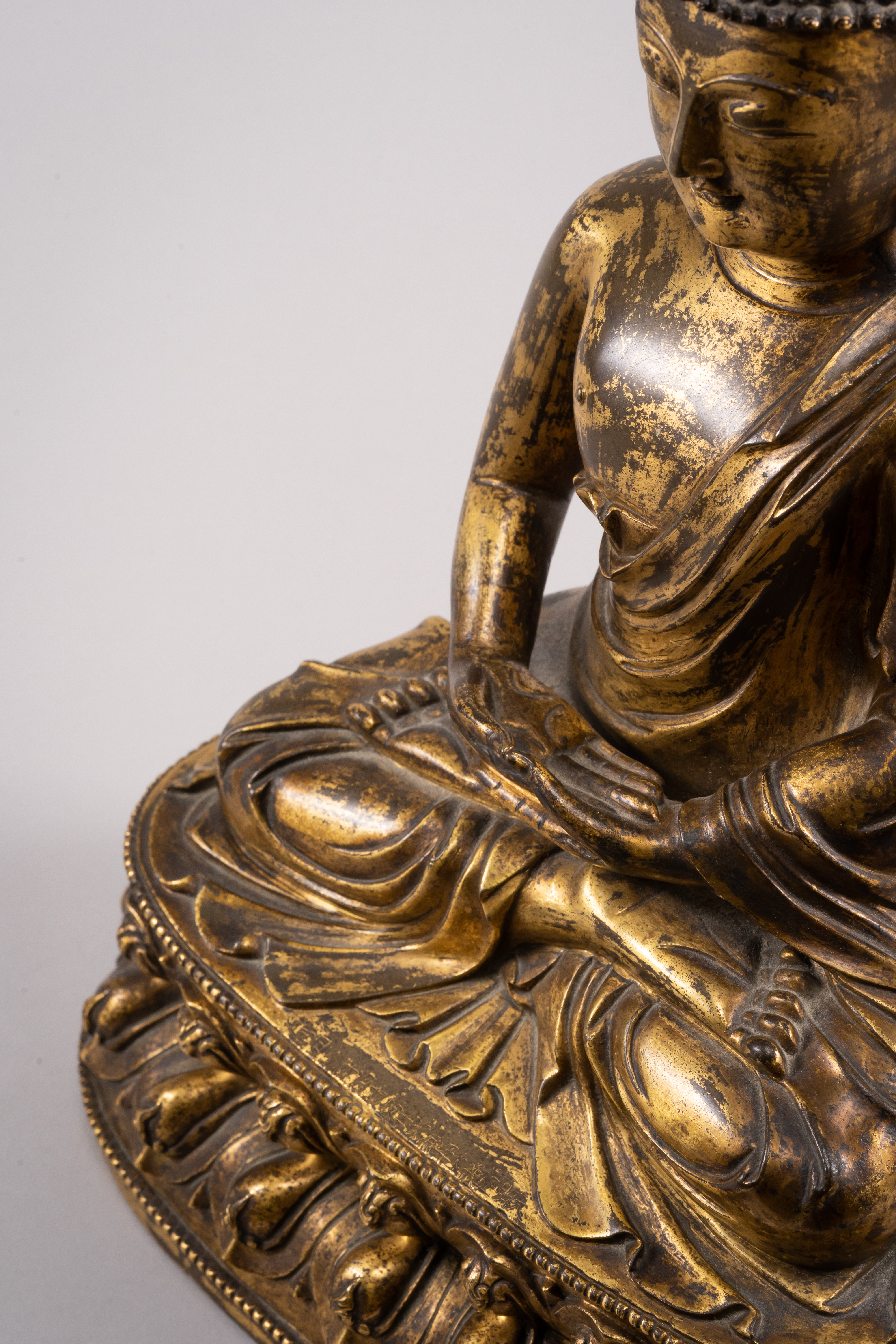
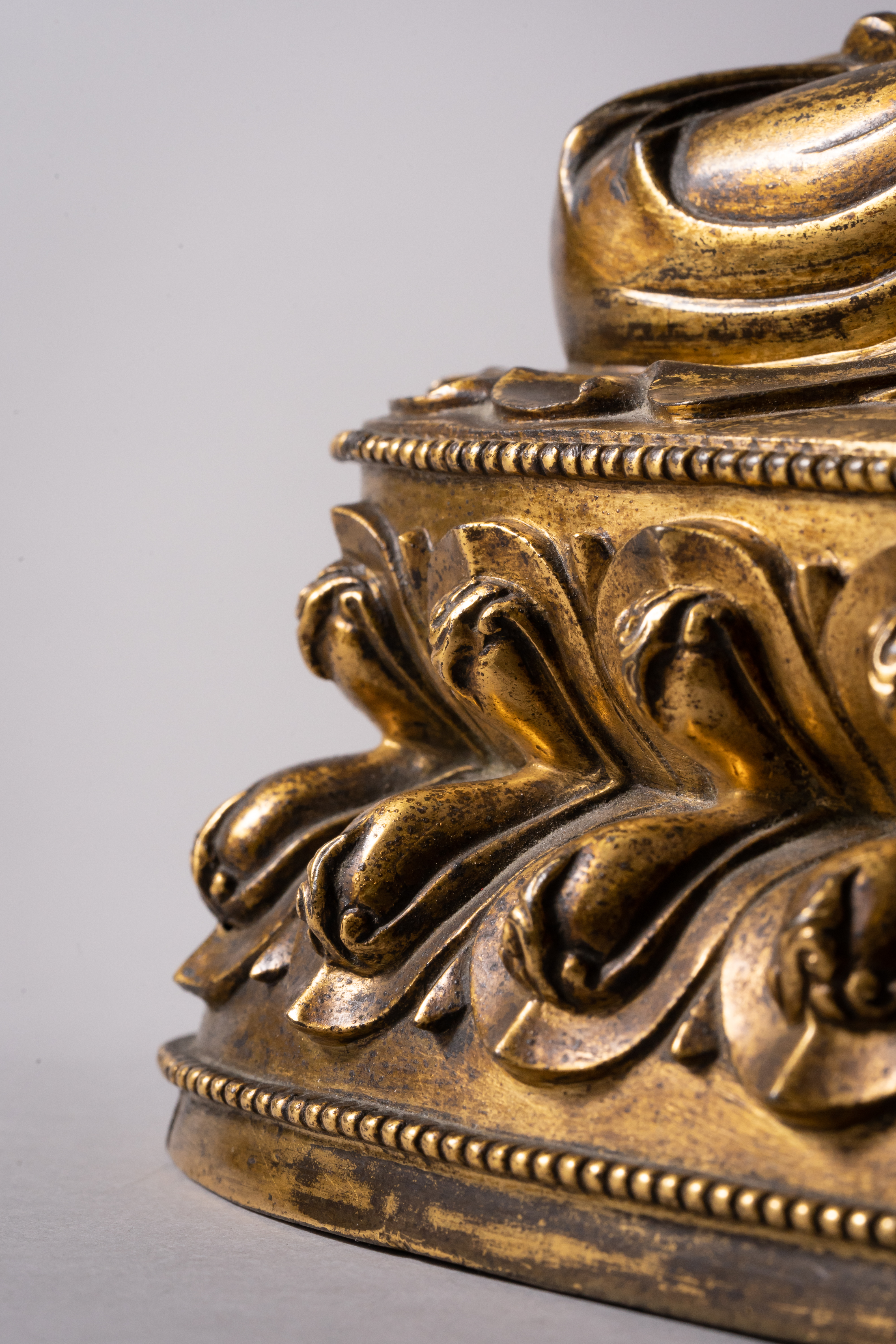
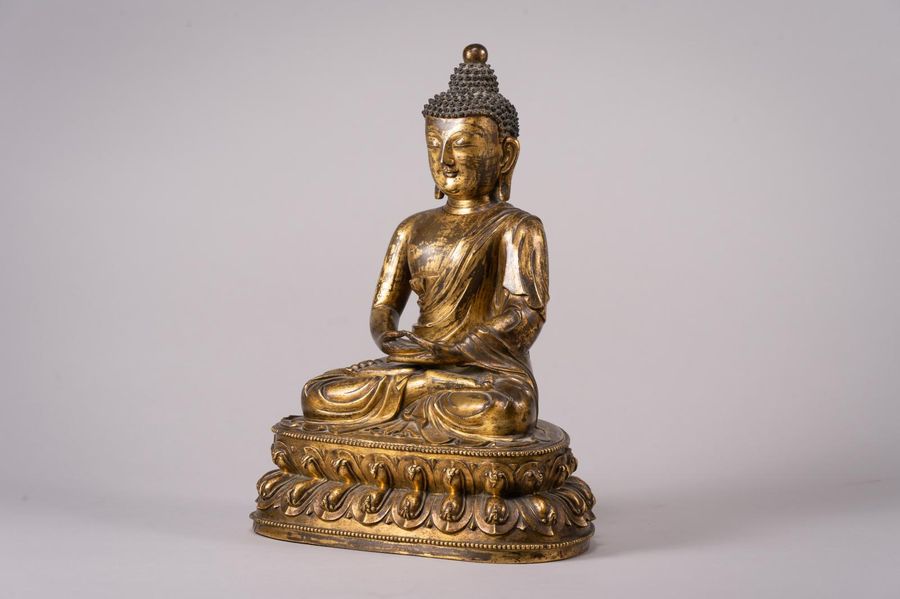
A very rare gilded bronze sculpture of Amitabha Buddha. China, Ming Dynasty, Zhengtong period, dated 1442 (the seventh year of Emperor Zhengtong’s reign). Depicted seated in padmasana on a double lotus-shaped pedestal, hands in dhyana-mudra (meditation), clad in a monastic robe that partially reveals the chest and leaves the right shoulder bare, curly hair covering the ushnisha, eyes half-closed, serene and smiling face, elongated earlobes, with the inscription “Da Ming Zhengtong Qi Nian Zao” (made in the seventh year of Emperor Zhengtong) on the top of the base.
Height: 29.5 cm
30,000 / 40,000 €
Provenance: Brought back from China in the late 19th century and subsequently given to the current owner’s grandmother.
Given its date, this bronze is an important artifact, reflecting the style of the early Ming period and the evolution of bronze statues during the 15th century. A relatively large number of gilded bronzes were produced during the reign of Emperor Yongle (1403–1424), due to the numerous offerings made to Tibetan religious leaders. These gifts declined sharply during the reign of Xuande (1425–1435), and this trend continued during the Zhengtong period (1435–1449). The style used during the Yongle period persisted until the mid-15th century. Thus, the pleating of the robe—and, in particular, the wide, flat fold running across the chest from the left shoulder—places this sculpture in the early Ming period, with a strong influence from the Yongle and Xuande periods. Similarly, the lotus petals on the base—which run continuously around the entire perimeter and are intricately carved at the tips—the square, broad face, the pronounced dome of the ushnisha, the elongated earlobes, often pierced in a “V” shape at the top, the deeply incised half-closed eyes with upper eyelids accented by a fine line, and the arched, incised eyebrow ridges are typical of early 15th-century bronzes.
Our lot is similar to the Xuande-marked Buddha published in *Buddhist Images in Gilt Metal*, Chang Foundation, p. 18, and stylistically very close to the 15th-century gilt-bronze Sakyamuni Buddha in the collections of the Victoria and Albert Museum in London (FE.58-1977), or to the one at the Museum of Fine Arts in Boston, from the Xuande period (52–1844). It is also very similar to the 27.3 cm tall Buddha marked “Yongle,” sold at Sotheby’s New York on September 11, 2012, Lot 183; see also the Buddha dated 1417, 29.5 cm tall, sold at Sotheby’s Hong Kong on October 5, 2011. Gilded bronze examples dated to the Zhengtong period are extremely rare. A gilded bronze depiction of the Buddha Akshobya, dated Zhengtong, 1439, 25.6 cm tall, was sold at Sotheby’s Paris on December 10, 2019, lot 18.
Experts: Philippe DELALANDE & Morgan BLAISE